
Medicine is built for the worst day.
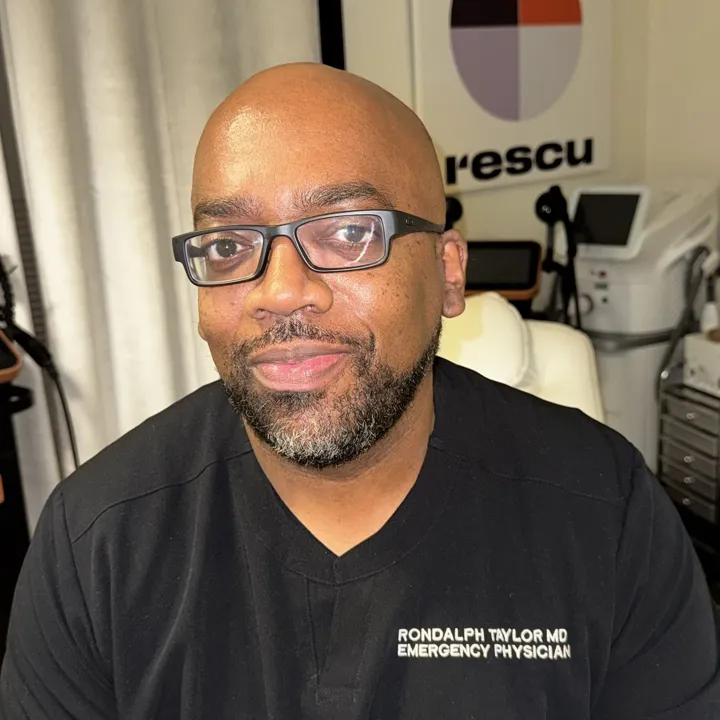
Emergency medicine is reactive by design. It waits for the failure, then responds, and it is extraordinary at that. Dr. Taylor has spent more than two decades in that room, and he still works shifts there.
But most of what decides how you feel at 50, 60 or 70 happens years earlier and quietly: strength you lose without noticing, sleep that slowly gets worse, recovery that takes a little longer every year. By the time it shows up in an emergency department, the story is mostly written.
The future of wellness moves care upstream, from sick care to health care. Not with a miracle machine, but with a physician, a baseline, a plan and the patience to re-measure.
Rescu is the medicine that comes before the emergency.
Lifespan is up. Healthspan is not keeping pace.
Healthspan is the number of years you live in good health. In 2024, Mayo Clinic researchers compared healthspan and lifespan across 183 countries using World Health Organization data. The global gap was 9.6 years. In the United States it was 12.4 years, the widest in the world, up from 10.9 years in 2000.
The researchers point to chronic disease burden, including mental health, substance use and musculoskeletal conditions. That last one matters to us: muscles, joints and the ability to move well are where many people first feel the gap.
Sources: Garmany A, Terzic A. JAMA Network Open, 2024 (PubMed); Mayo Clinic News Network.
Measure before you treat.
The future of wellness runs on information you can see. If nothing is measured, nobody can say what is working, including you.
- Body composition. A Styku 3D body scan measures circumferences and estimates fat and muscle mass in under a minute, so change is visible from visit to visit.
- Strength and movement. Proteus Motion measures power and control in every direction, which tells us more about how you move than a scale ever could.
- Your history. Every new client gets a physician intake. What you have tried, what you take and what you are hoping for shapes the plan.
Muscle deserves special attention. Strength and muscle mass decline with age, often unnoticed until stairs and grocery bags get harder. In the GLP-1 era it matters even more: some of the weight lost on these medications can be lean mass, which is why our GLP-1 program is paired with strength work and 3D tracking.
Four inputs, one sequence: LE²ON.
Most wellness centers hand you a menu. We think the order matters more than any single machine. LE²ON is how Rescu sequences four inputs around your goal:
- Light. Red and near-infrared light in our red light room, the T6000 panel and the LightStim bed (630 to 940 nm), plus TriLift and RF microneedling for skin.
- Energy². Energy and exercise: PEMF, shockwave, TriLift Body, Rescu Sculpt and training on the performance floor.
- Oxygen. Three hyperbaric chambers: a soft chamber at 1.3 ATA and two hard chambers at 1.5 ATA, plus ozone consultations.
- Nutrition. IV therapy, NAD+ and physician-supervised GLP-1 care.
Nobody needs all four on day one. Most people start with the station that maps to their biggest goal. Read Dr. Taylor’s LE²ON explainer.
Evidence vs hype: an honest map.
The wellness industry is full of confident claims. Here is where the evidence stands for what we offer, in plain language. We would rather lose a sale than oversell a therapy.
- Strength and resistance trainingStrong
Consistently linked with strength, function and healthy aging. It is the foundation we build on, with Myrna Brady and Proteus Motion testing.
- GLP-1 medication for weightStrong
Semaglutide and tirzepatide are FDA-approved for chronic weight management in appropriate patients. Physician supervision and muscle protection matter.
- Hyperbaric oxygen (HBOT)Proven for specific uses
The FDA has cleared hyperbaric chambers for specific conditions under hospital protocols. Wellness uses at lower pressures, like ours, are still being studied.
- Shockwave therapyModerate, condition-specific
Studied for tendon and soft-tissue problems such as plantar fasciitis and tennis elbow. Results vary and it works best alongside rehab.
- Red and near-infrared lightPromising
Some LED devices are FDA-cleared for specific skin uses. Evidence for recovery and pain is growing but depends on device, dose and wavelength.
- PEMFEarly
Some PEMF devices are FDA-cleared for specific uses. Evidence for broader wellness claims is still limited.
- IV vitamins and NAD+Limited
Little high-quality evidence of benefit for healthy people. We screen first and tell you what to realistically expect.
- Ozone therapiesConsultation only
Not FDA-approved to diagnose, treat, cure or prevent any disease. Offered only after a physician consultation, with risks explained in writing.
FDA guidance on hyperbaric oxygen: Hyperbaric Oxygen Therapy: Get the Facts. Our service pages list sources for each therapy.
How to choose a wellness clinic in Westchester.
Whether you choose Rescu or somewhere else, these seven questions separate medicine from marketing.
- A physician who sees you, not just signs off. Ask who reviews your history, who decides your plan and who is on site.
- Screening before treatment. Hyperbaric oxygen, lasers, IVs and medications all have reasons not to do them. You should hear those first.
- Honest claims. Look for “may support,” not “cures.” FDA status should be stated plainly, especially for newer therapies.
- A baseline and a re-check. If nothing is measured, nobody can tell you what is working. Ask what gets re-measured and when.
- A plan, not a punch card. Order, frequency and a reason to stop matter more than the number of sessions you buy.
- Prices in writing. You should know the cost of a session, a package and a membership before you start.
- Respect for your other doctors. Recovery care belongs alongside your physical therapist and physicians, never instead of them.
Why Scarsdale, and why now.
Westchester runs on full calendars: commuters, parents, athletes of every age and people who plan to stay active for decades. The future of wellness has to fit into that week, not take a day trip into the city.
Rescu sits in the middle of the county at 111 Brook Street, minutes from Hartsdale, Edgemont and White Plains, with weekend hours. See how far you are from Rescu.
Questions
What is the future of wellness?
It is care that starts before something goes wrong. Instead of waiting for symptoms, you measure early, follow a physician-directed plan and re-measure to see what is working. The goal is more good years, not just more years.
What is healthspan, and how is it different from lifespan?
Lifespan is how long you live. Healthspan is how many of those years you spend in good health. A 2024 Mayo Clinic analysis found Americans spend an average of 12.4 years in poor health, the widest gap of 183 countries.
Is longevity medicine evidence-based?
Parts of it are, and parts are still early. Strength training and physician-supervised GLP-1 care for weight have strong evidence. Hyperbaric oxygen is proven for specific FDA-cleared conditions under hospital protocols, while many wellness uses are still being studied. A good clinic tells you which is which.
Do I need to be sick to come to Rescu?
No. Many people come because they want to stay ahead: recover faster from training, keep their strength, sleep and energy, or look as well as they feel. Every visit still starts with physician screening.
Does Rescu replace my primary care doctor or physical therapist?
No. Rescu works alongside your primary care doctor, specialists and physical therapist, never instead of them. If something needs a medical workup, we will tell you.