Aesthetics · Your First Time
WHAT TO EXPECT
FROM TRILIFT
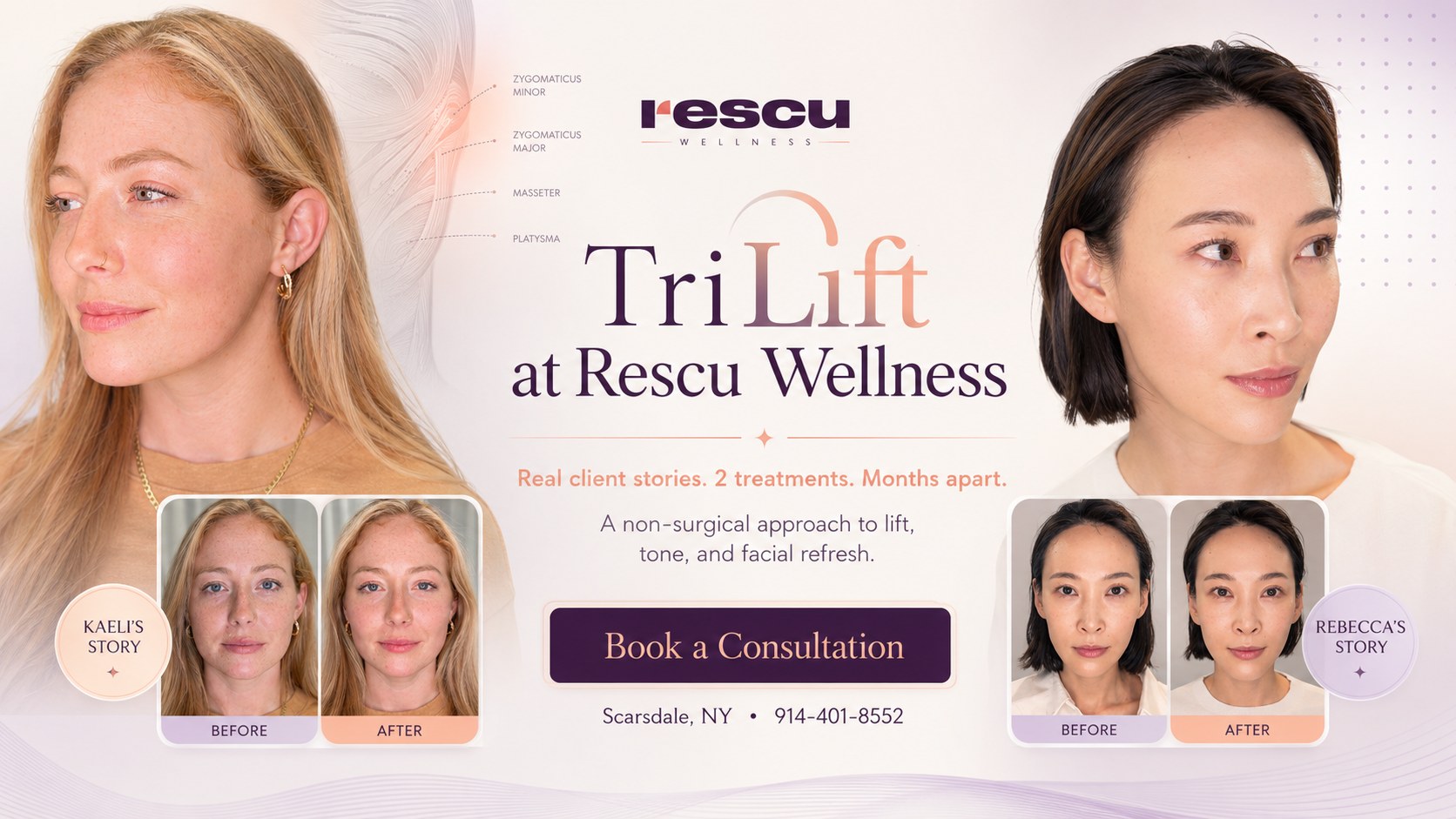
If you're in your 40s, 50s, or 60s and you've started wondering whether it's time to "do something" — but needles and surgery feel like a bigger step than you're ready for — TriLift is usually the first conversation we have. Here's exactly what it is, and what your first visit actually looks like.
First, what is it?
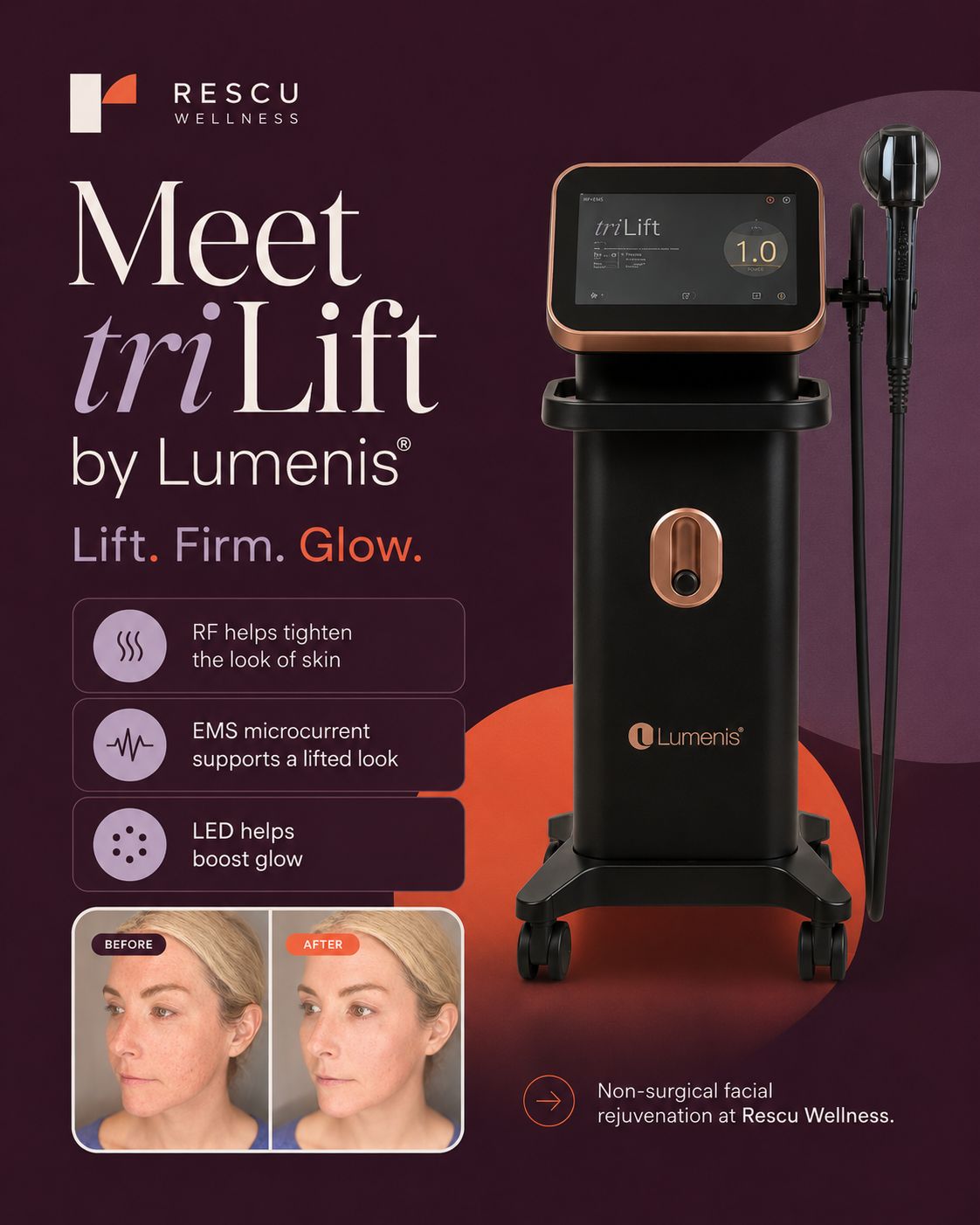
TriLift works on two layers at once. Dynamic Muscle Stimulation (DMS) gently contracts the facial muscles — think of it as a workout for the muscles that hold your face up, which naturally weaken with age. At the same time, radiofrequency (RF) warms the deeper skin to support collagen. Muscle first, then skin. No needles, no injected product, no cutting.
That two-layer approach is why it appeals to first-timers: it isn't adding anything to your face or freezing it — it's toning what's already there.
Your first visit, step by step
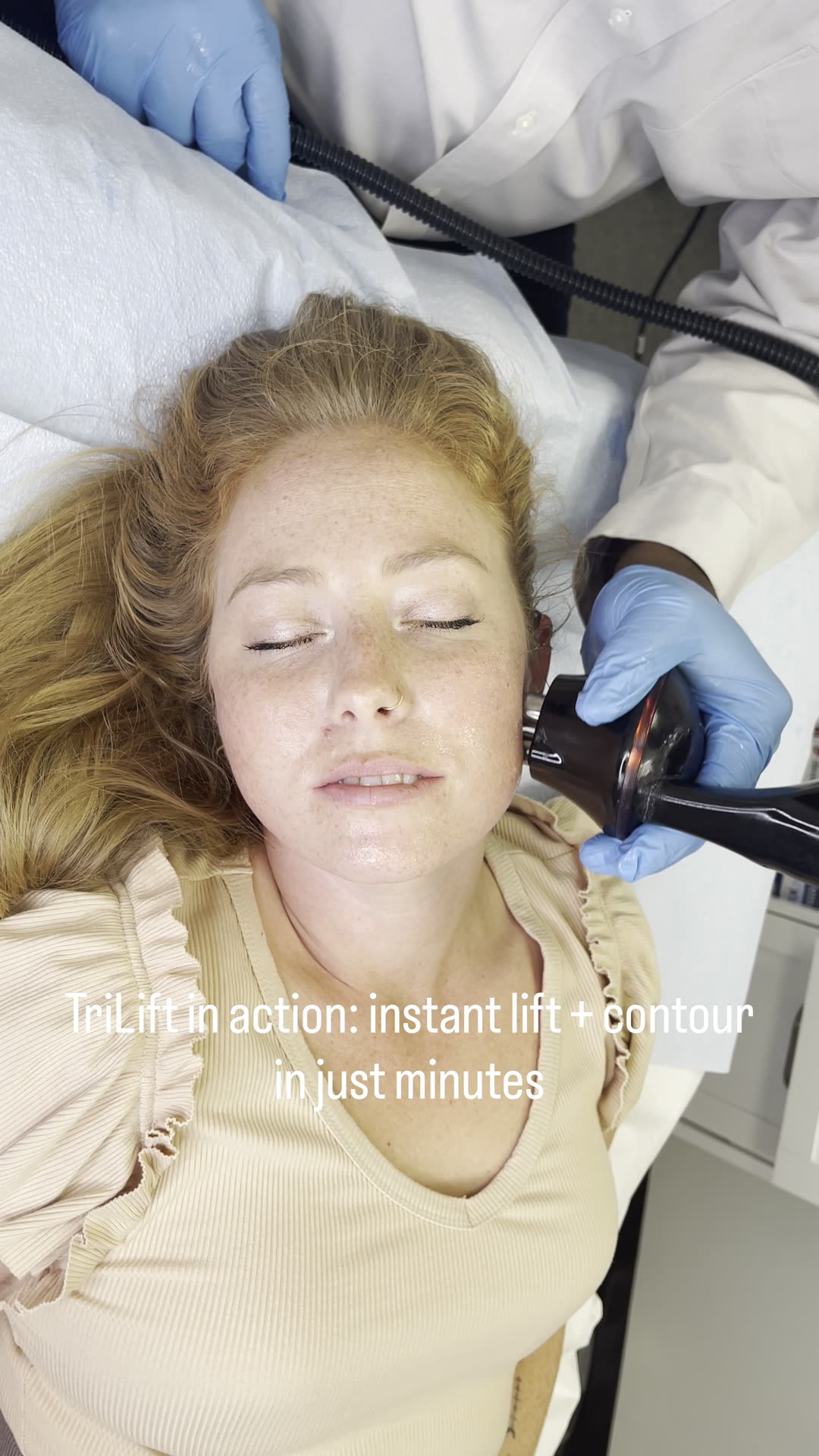
Every first visit starts with a physician screening — included, no extra cost. Because Rescu is physician-owned, we check that TriLift is right for you before anything begins. Pacemakers, implanted devices, metal or dental implants in the treatment area, pregnancy, or active skin conditions all need a look first.
You'll lie back comfortably. Most people describe the feeling as a warm, tapping, tightening sensation — like a workout for your face — not pain. No numbing needed. A session runs comfortably within a lunch break.
Skin may look a little flushed, the way it does after exercise — and that fades quickly. There's essentially no downtime. You can go straight back to your day, which is exactly why so many first-timers start here.
Many people see a subtle lift and glow within days. But TriLift builds — because it's toning muscle and stimulating collagen, results develop over a series and keep improving in the following weeks.
How it's different from filler and Botox
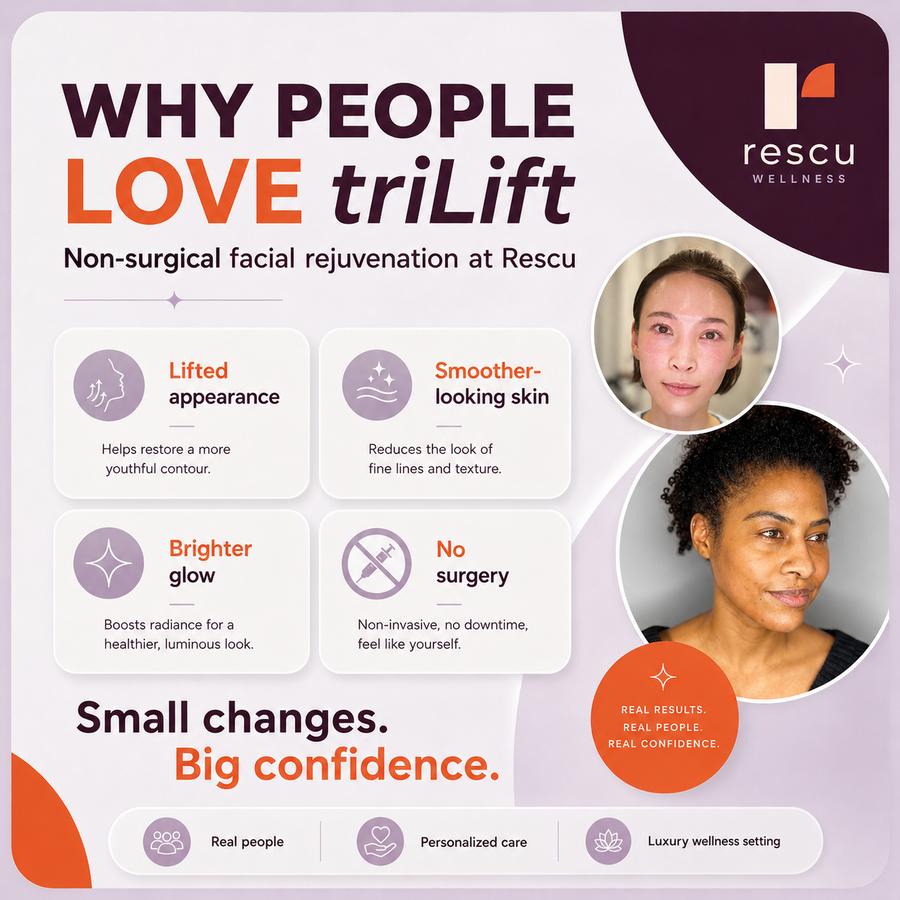
This is the question we hear most. The short version: filler adds volume, Botox relaxes muscle, and TriLift does neither. It tones the muscle and works the skin using your own physiology — nothing injected, nothing frozen. For someone who wants to look like a rested version of themselves rather than "done," that distinction is the whole point. Many clients use TriLift instead of — or to reduce how much they rely on — injectables.
Real results
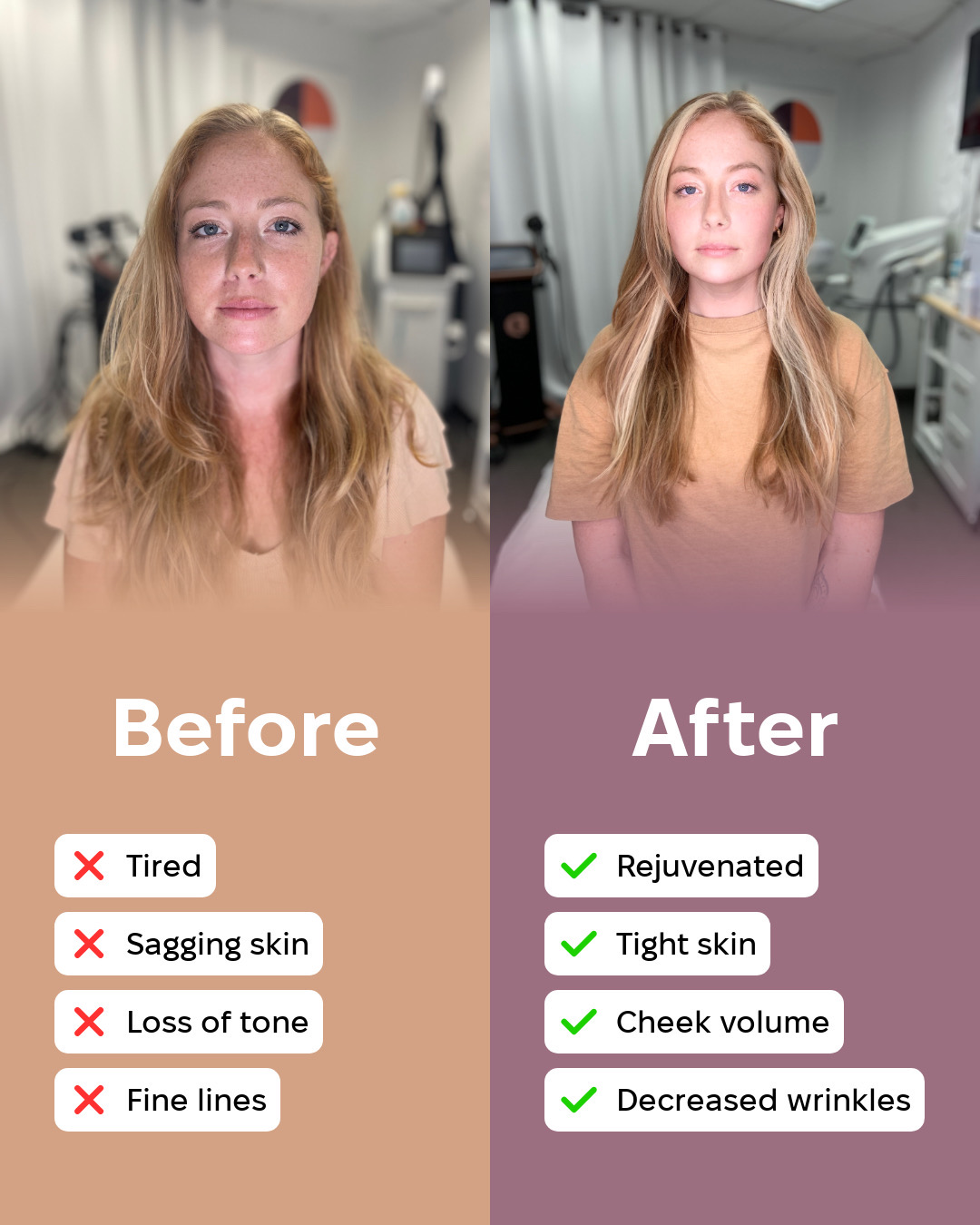
We only show real, consented before-and-afters — no stock photos, no borrowed results. We've documented one client's full experience start to finish, including honest notes on what to expect session by session. Read the full TriLift case study here.
TriLift supports facial toning and skin quality — it isn't surgery and it won't do what surgery does. Results build gradually, vary from person to person, and depend on doing a series. What we promise is a physician screening, real expectations, and real (not borrowed) proof.
Is it right for you?
TriLift tends to fit people who are noticing early softening along the jaw, cheeks, or brow and want a natural, needle-free place to start — and who'd rather build a subtle result than make a dramatic change. The honest way to find out is the $300 demo: you feel it, you see the device, and the physician tells you plainly whether it's your best option or whether something else fits better. If you continue, that $300 applies to your first session.
This article is educational and not intended to diagnose, treat, cure, or prevent any disease. TriLift is an aesthetic treatment performed under physician supervision; individual results vary and a series is typically needed. Screening applies (pacemakers/implanted devices, metal or dental implants in the treatment area, pregnancy, active skin conditions). Every client is screened by a physician before a first session.